
We are pleased to present another article from the 19th edition of our journal Perspectives of Higher Education Development, a peer-reviewed scientific and methodological journal published by the Higher Education Reform Experts (HEREs) of Uzbekistan.
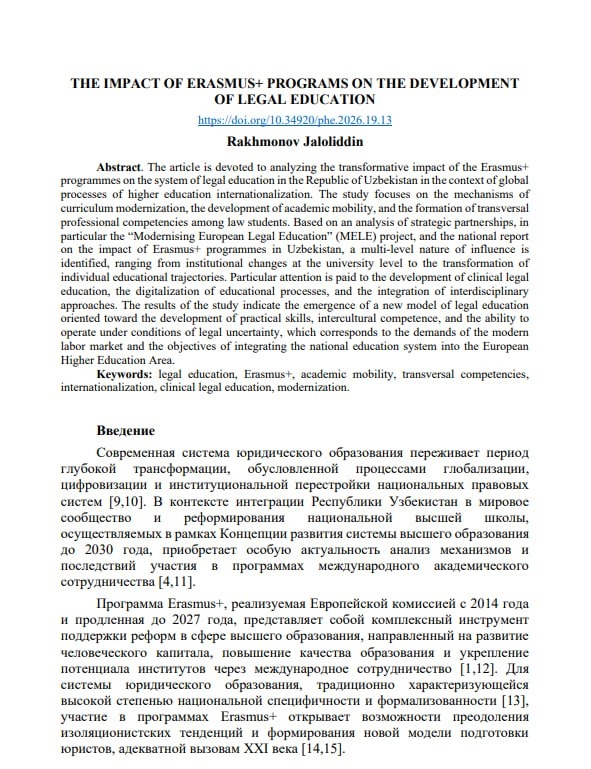
This article explores how the Erasmus+ Programme has contributed to the modernization of legal education in Uzbekistan by promoting curriculum reform, academic mobility, international cooperation, and the development of practical and transversal competencies. Drawing on national experience and international initiatives such as the MELE (Modernising European Legal Education) project, the article highlights Erasmus+ as a catalyst for transforming legal education in line with European Higher Education Area principles.
Key insights from the article:
Jaloliddin Rakhmonov's article in *Perspectives of Higher Education Development* analyzes how the Erasmus+ Programme modernized Uzbekistan's legal education by promoting curriculum reform, academic mobility, and European standards. Key impacts include enhanced practical skills through clinical education, improved intercultural competence, and the integration of digital tools like AI and LegalTech. The author recommends further internationalization and industry cooperation to equip future lawyers with 21st-century competencies.
Read the full article here: https://doi.org/10.34920/phe.2026.19.13


