

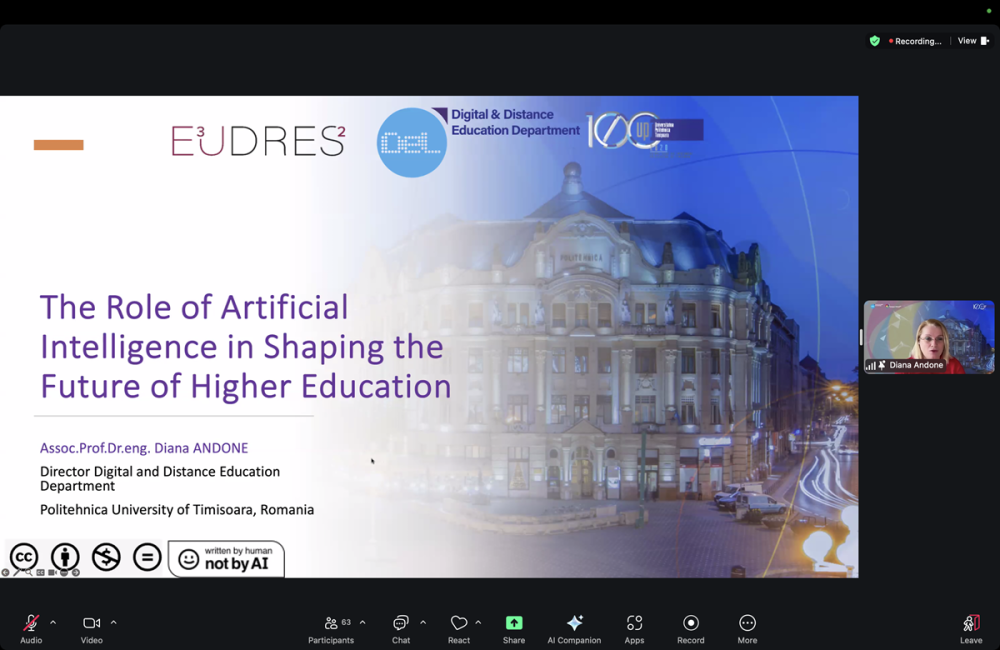
On 7–8 April, 2025 the SPHERE network hosted a two-day online seminar focused on artificial intelligence (AI) in higher education. The event brought together over 100 participants from universities, national agencies, and student bodies involved in the Higher Education Reform Experts (HERE) network, and explored how AI is transforming learning, teaching, curriculum development, professional practice, and institutional governance. AI’s growing presence in society is mirrored in the education sector, where its integration raises fundamental questions, not only about technical adoption, but also about values, ethics, and institutional direction. Across sessions, speakers underscored that AI is no longer a future consideration, but an active and accelerating force in higher education. Participants discussed key implications, including how to balance AI’s potential for personalization and efficiency with the need for academic integrity, equity, and critical engagement.
Key Themes and Discussions Day 1 Highlights – Pedagogy and Institutional Readiness The seminar opened with remarks from European Commission representatives, highlighting ongoing EU initiatives such as the AI Act and digital education strategies. The first panel shifted the debate from “if” AI should be used in education to “how” it can be integrated responsibly. Presenters emphasized the importance of empowering educators and students through training, regulation, and thoughtful application. Case studies from HERE representatives showcased national strategies and institutional innovations from AI schools and partnerships with technology providers to AI-supported teaching and administration. Further sessions explored the pedagogical impact of AI tools, including socially interactive robots, generative content, and learning analytics. Speakers emphasized that these tools must support and not replace educators, and that integration should be guided by clear institutional frameworks. 
Day 2 Highlights – Professional Applications and Governance The second day opened with examples of AI’s influence on professional practice, including academic credential recognition and medical education. Presenters detailed how AI enhances processes such as document verification and surgical training, while reiterating the need for ethical oversight and human decision-making. A session on AI in university admissions examined the legal, ethical, and financial dimensions of using algorithms in evaluating student applications. Discussion focused on the need for transparency, faculty involvement, and meaningful human oversight, especially under evolving EU regulations. In the final panel, speakers addressed the broader institutional landscape. Topics included inclusive access to AI tools, ecological impact, student data protection, and the shifting nature of academic responsibility in the age of AI. Breakout sessions on both days allowed participants to collaboratively identify risks, formulate strategies, and reflect on the implications of AI for their own institutions. From practical tools to system-level reforms, attendees contributed ideas for shaping responsible and inclusive AI use in higher education. The closing discussion emphasized the need for coordinated, cross-disciplinary approaches. While AI implementation in higher education remains uneven, the seminar concluded highlighting that institutions must move from experimentation to strategic integration, drawing on shared experiences, clear policy, and ethical foresight.


