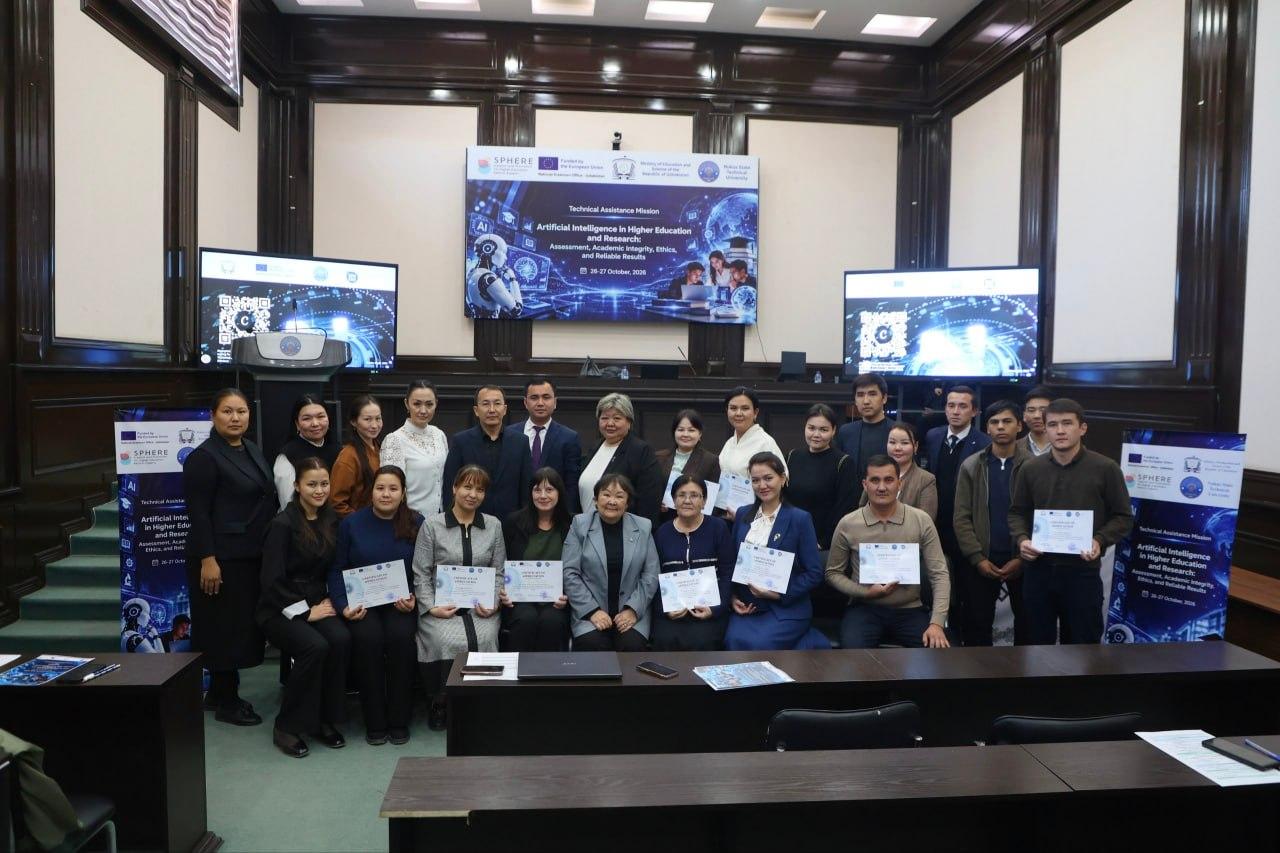
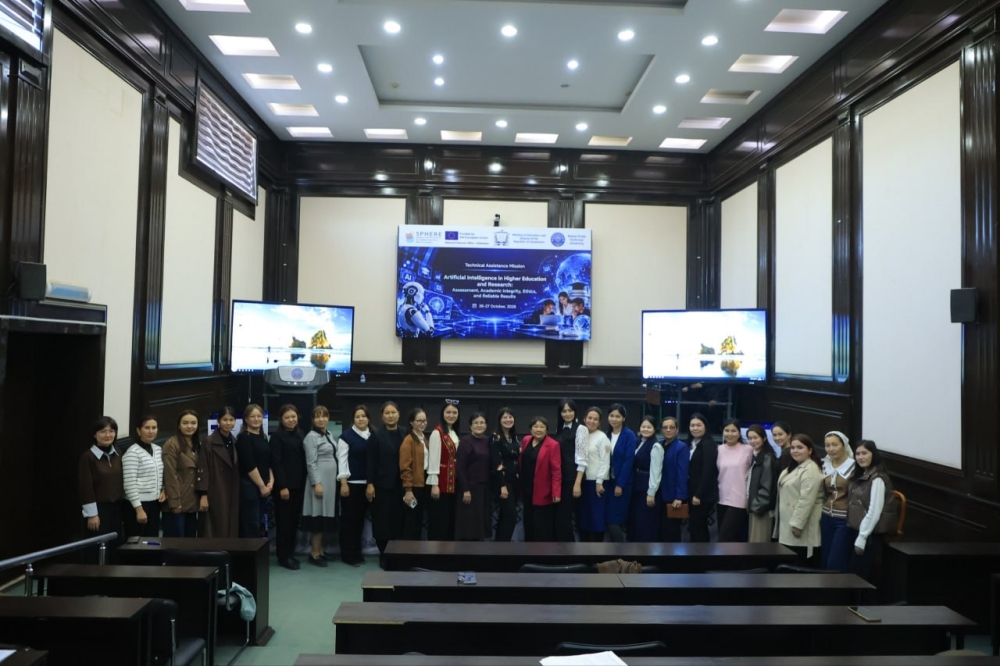
On 26–27 October 2026, a Technical Assistance Mission (TAM) seminar entitled “Artificial Intelligence in Higher Education and Research: Assessment, Academic Integrity, Ethics, and Reliable Results” took place at the Nukus State Technical University.
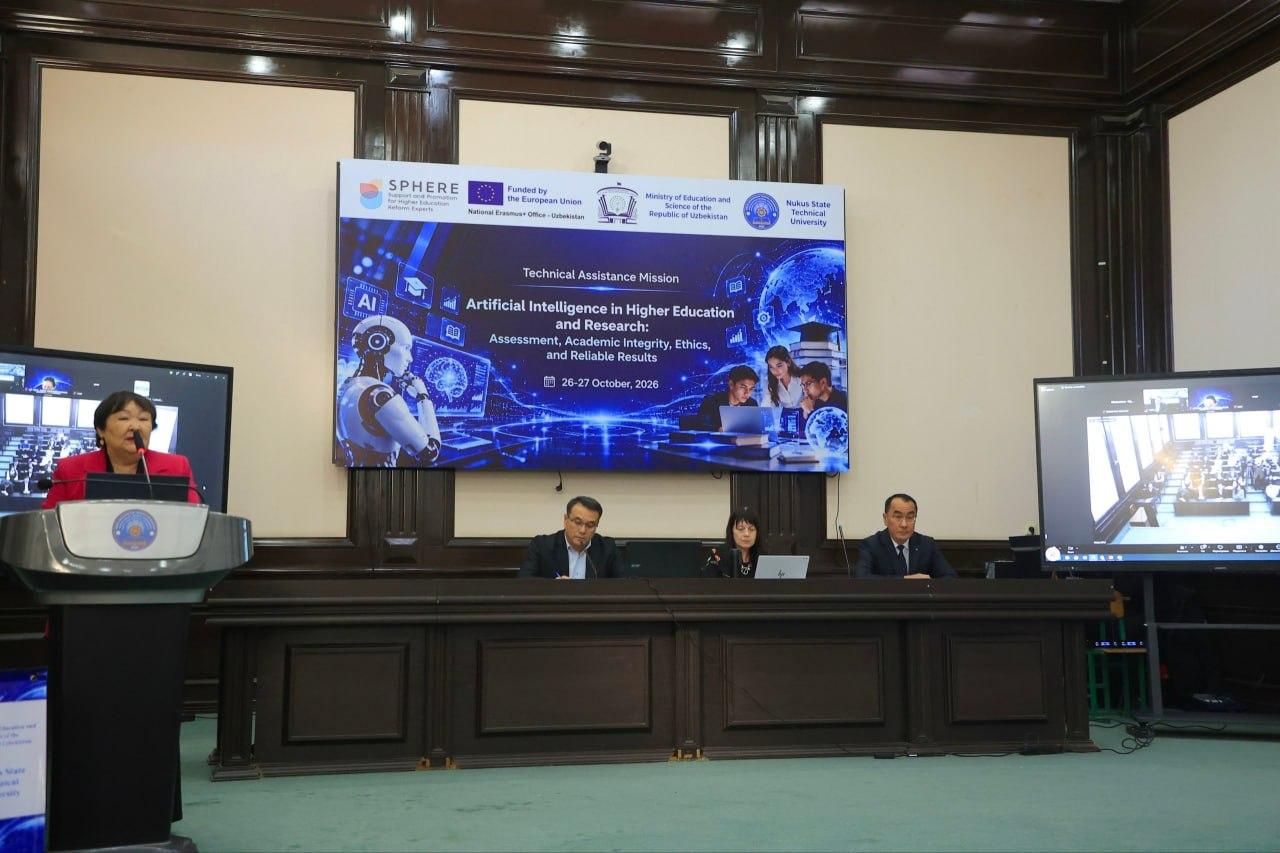
The seminar focused on the responsible use of artificial intelligence in higher education and academic research, addressing academic integrity, assessment methods, and the reliability of research results.
📌 Day 1 of the TAM Seminar started with the opening and welcoming remarks by Murat Atamuratov - Committee Chairman of the Jokargy Kenes of the Republic of Karakalpakstan, Professor Batirbek Kaipbergenov - Rector of Nukus State Technical University, Aziza Abdurakhmanova - Coordinator of the National Erasmus+ Office in Uzbekistan.
Professor Asiya Tureniyazova, a member of the National Team of Higher Education Reform Experts (HEREs), drew attention to the relevance of the seminar's topic and aspects related to reforms in higher education.
EU Experts in AI Education and Research:
At the seminar, Professor Sonja Bjelobaba of Uppsala University (Sweden) took part in person and delivered a presentation on academic integrity and the use of generative artificial intelligence. Professor Martin Ebner of Graz University of Technology (Austria) contributed to the TAM seminar online.
Keynote lectures of the first day of TAM seminar covered such topis as "Academic Integrity and GenAI" by Professor Sonja Bjelobaba and "AI in Higher Education" by Professor Martin Ebner.
🔹 The lecture by Professor Sonja Bjelobaba focused on the academic integrity, its meaning and importance, AI tools for academic writing, benefits and limitations of AI in education, post-plagiarism and GenAI.
🔹The lecture by Professor Martin Ebner provided information on opportunities of artificial intelligence technologies in higher education, their use in the learning process, and their importance in improving the quality of education.
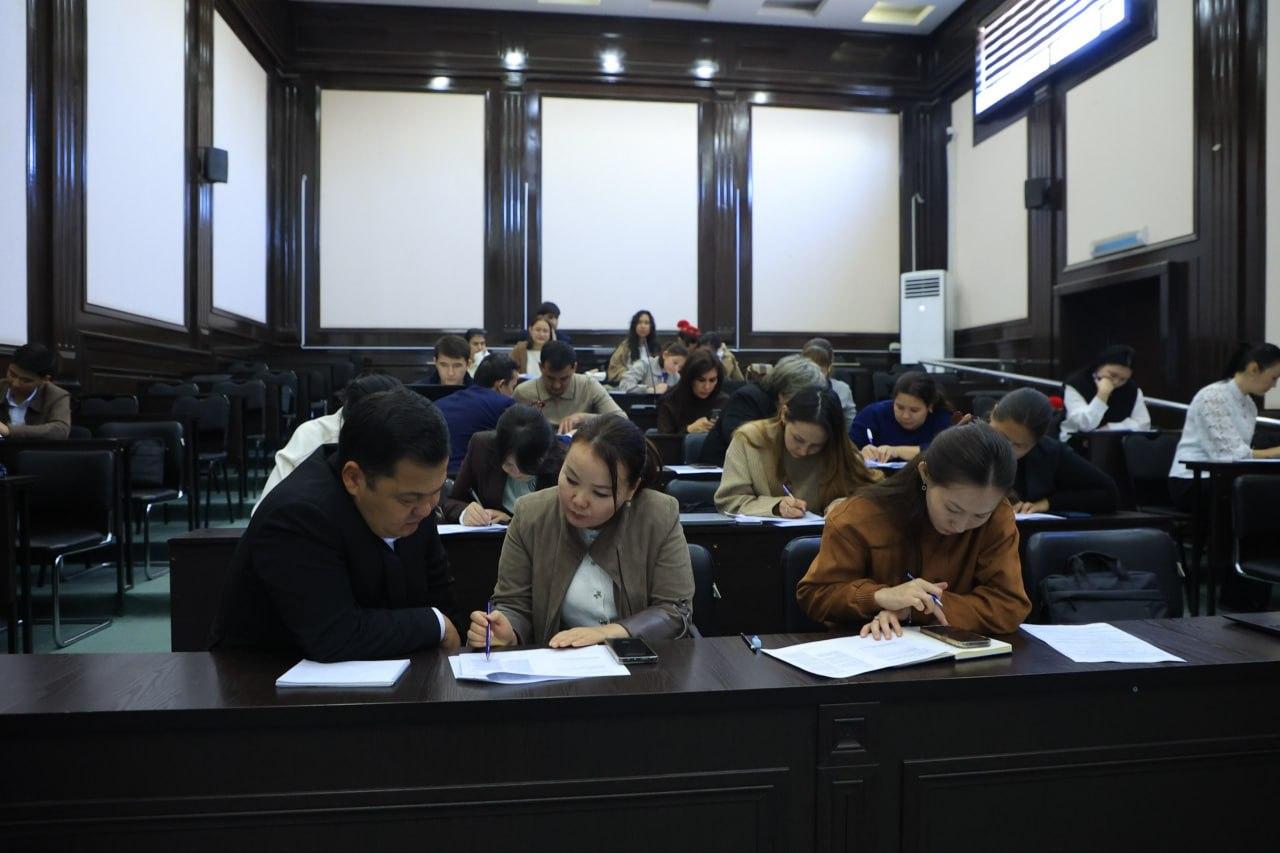
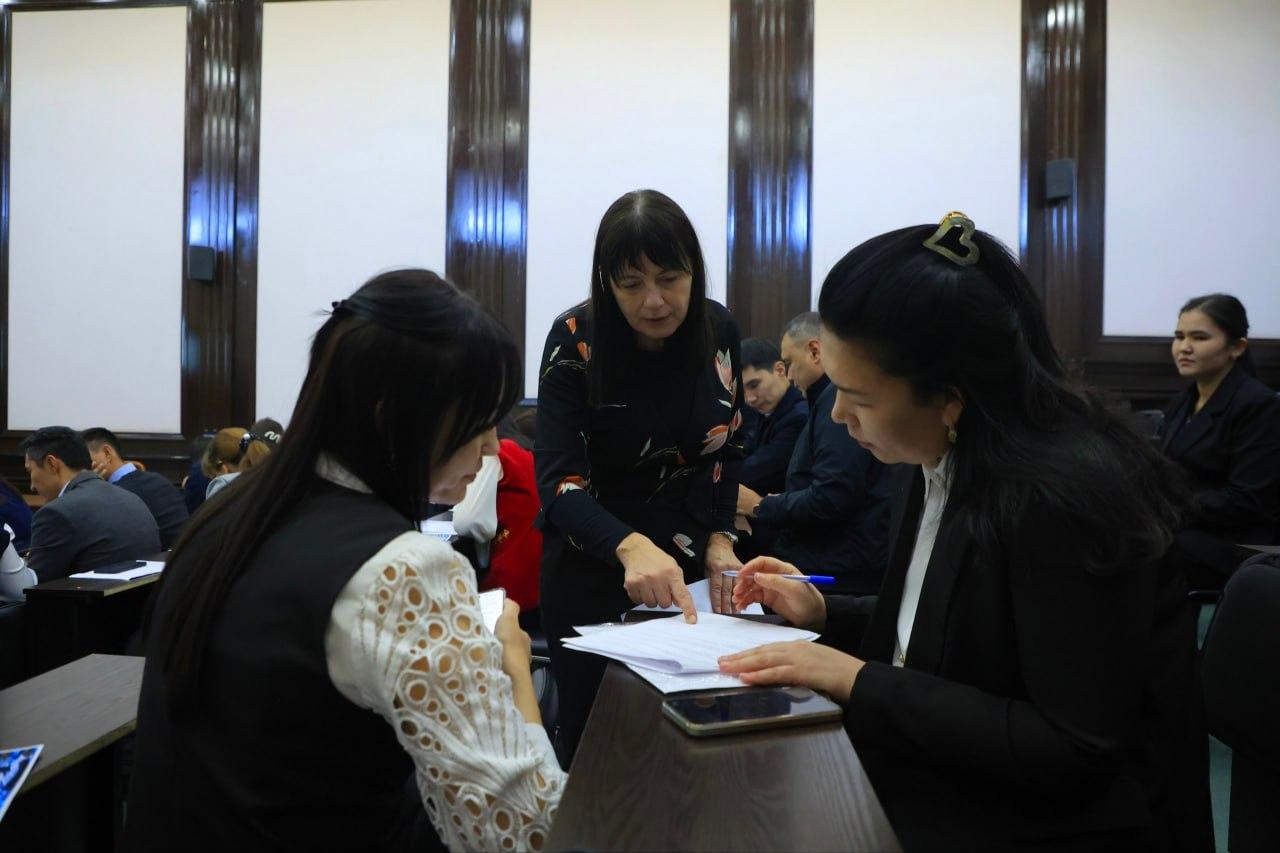
📝Participants of the TAM seminar also had an opportunity to participate in workshops conducted by Professor Sonja Bjelobaba focused on "Assessment in the age of GenAI" and "Institutional policies and guidelines for ethical use of GenAI in education". During the session, issues of ensuring academic integrity, observing established norms in the use of artificial intelligence, and shaping principles in this area at higher education institutions were considered. The discussions focused on student assessment in the context of the widespread use of generative artificial intelligence, ensuring the reliability of assessment systems, and upholding the principles of academic integrity.
The first day of the TAM seminar concluded with a summary of the key takeaways and reflections on the main topics discussed throughout the day.
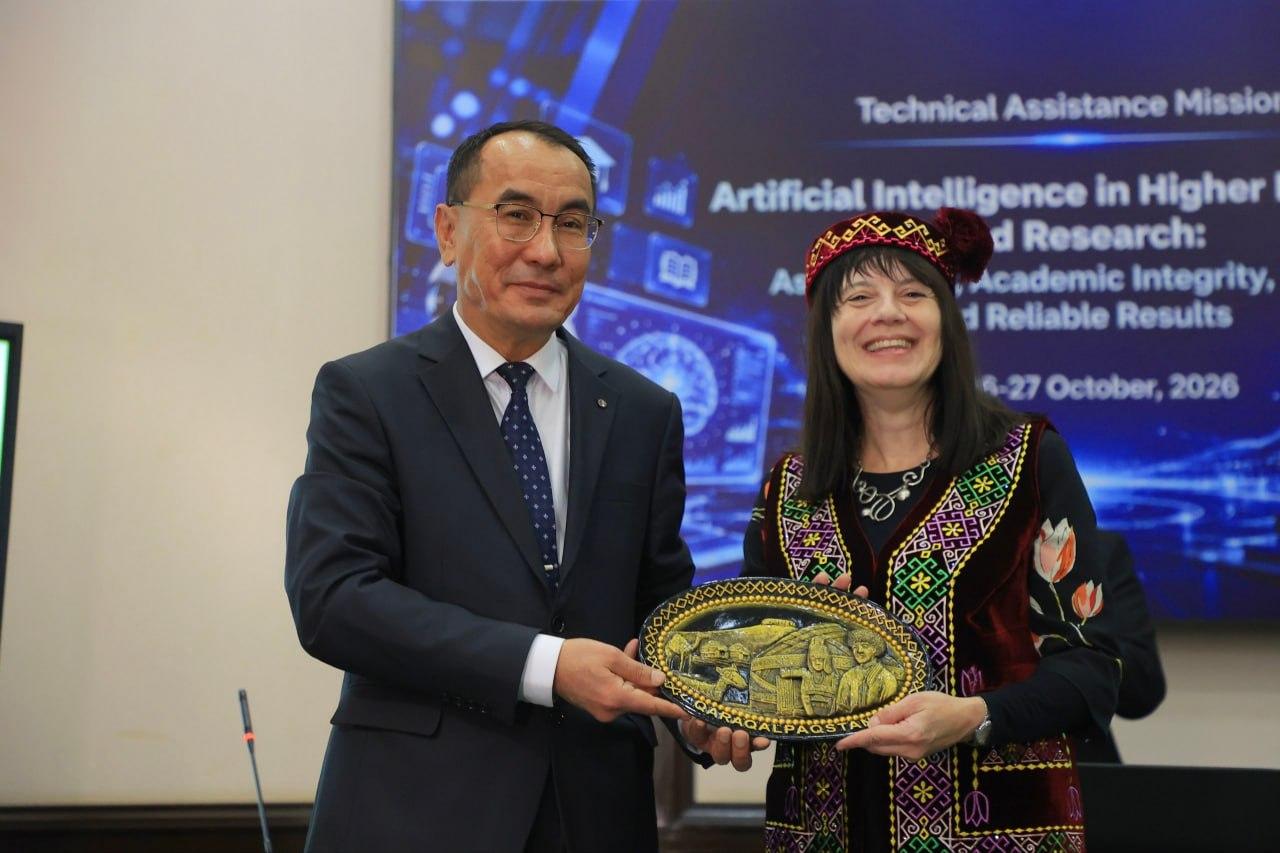
📌 Day 2 of the TAM seminar focused on the ethical use of generative artificial intelligence (GenAI) in academic research, with a keynote lecture and an interactive workshop led by Professor Sonja Bjelobaba, EU Expert in AI Education and Research.
🔹 The keynote lecture focused on the topic “Ethical Use of GenAI in Research” which was particularly beneficial for researchers, PhD and Doctoral students.
🔹 The workshop, “Institutional Policies and Guidelines for Ethical Use of GenAI in Research,” provided an opportunity to learn how to develop practical policy provisions and institutional actions on specific cases provided.
➡️ The seminar concluded with a Q&A session and final discussion, allowing participants to reflect on the key topics addressed throughout the two-day event and exchange perspectives on the ethical integration of GenAI in higher education and research.
⚡️ During the two-day seminar participants became familiar with European approaches to governing artificial intelligence in higher education, assessment models that ensure academic integrity, the risks of misusing artificial intelligence in research and ways to address them, as well as issues of increasing the reliability and transparency of research results.
This event is organised by the National Erasmus+ Office of Uzbekistan (NEO) jointly with the Ministry of Education and Science (MES) and the Nukus State Technical University (NSTU) as part of the Higher Education Reform Experts (HEREs) activities in the framework of Erasmus+ Programme of the European Union