
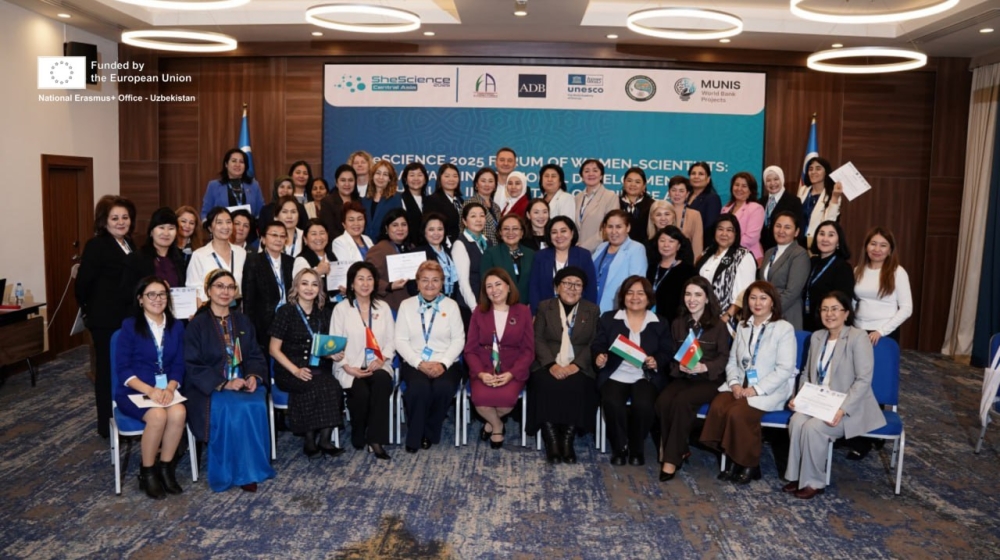
The National Erasmus+ Office in Uzbekistan participated in the SheSCIENCE 2025 Forum: “Promoting Regional Development Through the Integration of Scientific and Innovation Ecosystems”, held on 27 November in Tashkent and organised by the Academy of Sciences of the Republic of Uzbekistan, the World Bank, and the Asian Development Bank.
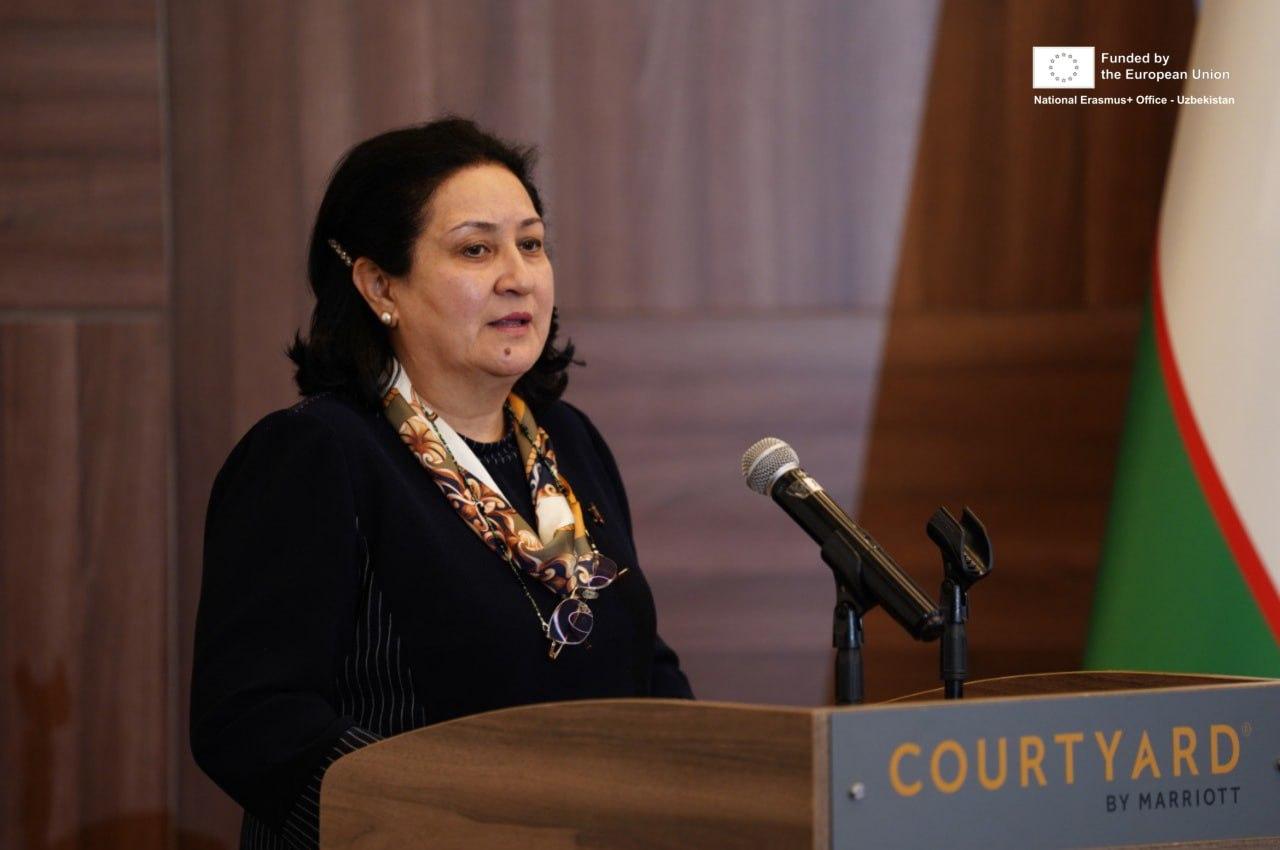
The Forum brought together women scientists from Kazakhstan, Kyrgyzstan, Tajikistan, Turkmenistan, Azerbaijan and Uzbekistan, alongside international experts and development partners, to discuss regional priorities, integration of innovation ecosystems, and mechanisms to strengthen scientific collaboration in Central Asia.
As part of the session “Opportunities for Financing Regional Research”, Aziza Abdurakhmanova, Coordinator of the National Erasmus+ Office, delivered a presentation on the Erasmus+ Programme and its instruments for capacity building in higher education. The presentation clarified that Erasmus+ does not fund research activities but significantly contributes to strengthening institutional capacities, modernising curricula, enhancing digital and green skills, and fostering long-term academic partnerships across Central Asia.
A number of successful and sustainable Erasmus+ Capacity Building in Higher Education (CBHE) projects were showcased as examples of how cooperation in higher education naturally leads to joint academic outputs, including collaborative research initiatives carried out by universities themselves. These examples demonstrated the impact of Erasmus+ in creating environments where scientific cooperation and women’s leadership can grow.
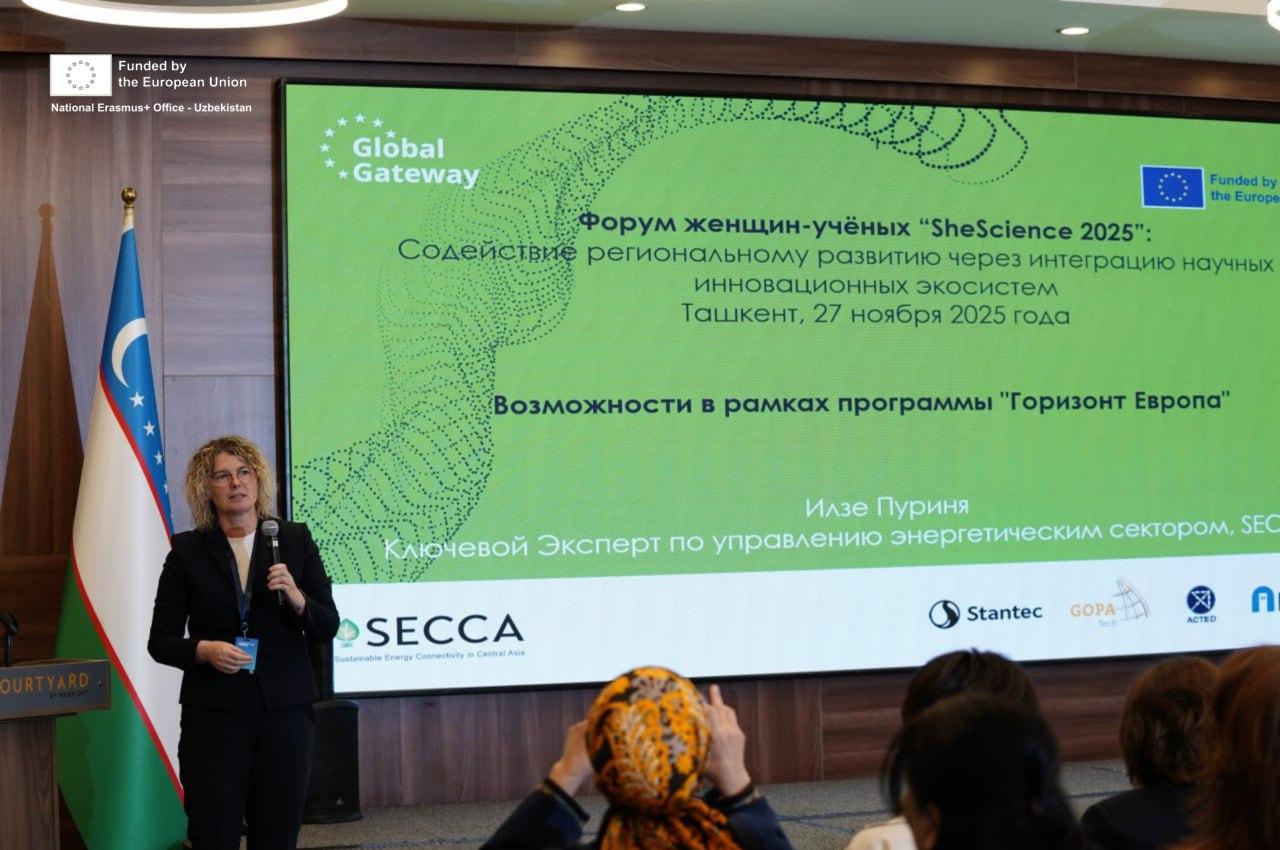
In addition, opportunities under the Marie Skłodowska-Curie Actions (MSCA) of Horizon Europe were also highlighted, informing participants about pathways for international mobility, scientific training, and research career development for women scientists in Central Asia.
The participation of the National Erasmus+ Office underscored the importance of education, academic cooperation and institutional capacity building as foundations for advancing sustainable regional development and empowering women in science.


